

Remembering Lynn Conway, Computer Pioneer Who Overcame Discrimination
Transgender trailblazer's groundbreaking work helped pave the way for personal computers and cell phones

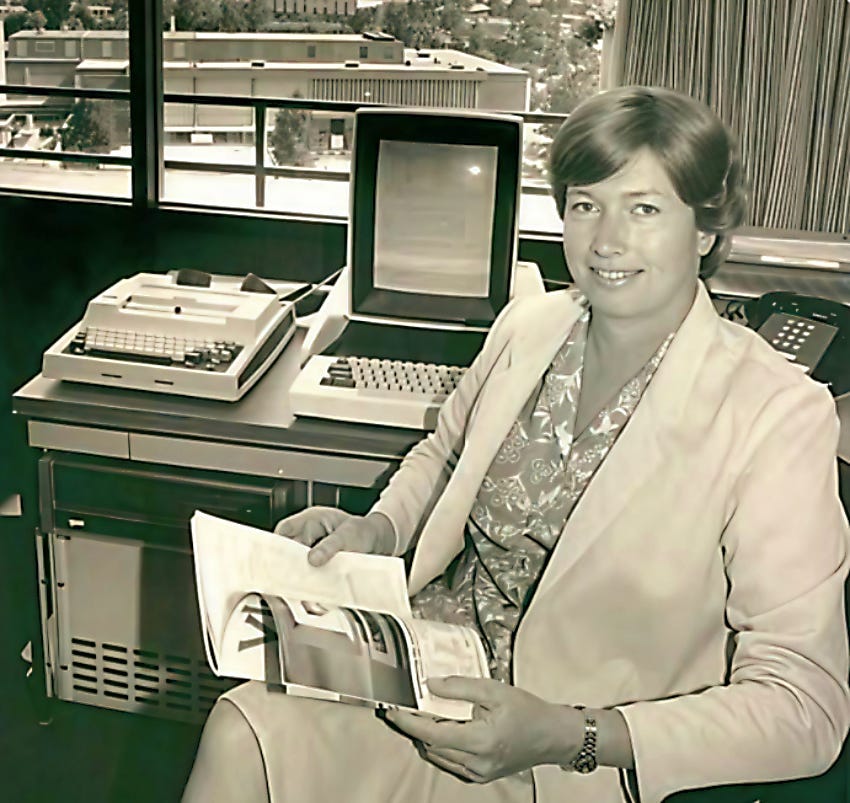
If life guaranteed fairness, Lynn Ann Conway would have lived out her life counting her vast fortune just like Bill Gates. But life does not offer such guarantees.
Several years before young Gates first began noodling around on his prep school's computer center, writing his first programs, Conway was part of a team of computer engineers involved in designing a revolutionary super-fast computer at IBM.
Dubbed Project-Y, this new computer was expected to be 100 times faster than the company's IBM 7030 (also known as "Stretch"), the existing title holder of "world's fastest computer" at the time.
The technology they developed utilized a revolutionary technology called "superscalar processing," in which processors are capable of achieving an instruction execution throughput of more than one instruction per cycle.
Assigned to this task were a select group of IBM's best. Among them Conway, albeit under her deadname.
Even though she had clandestinely taken estrogen as early as 1955, Conway was still presenting as a man in 1964 when Project-Y was initiated. And her colleagues had no reason to think she was anything but the married father of two that they knew.
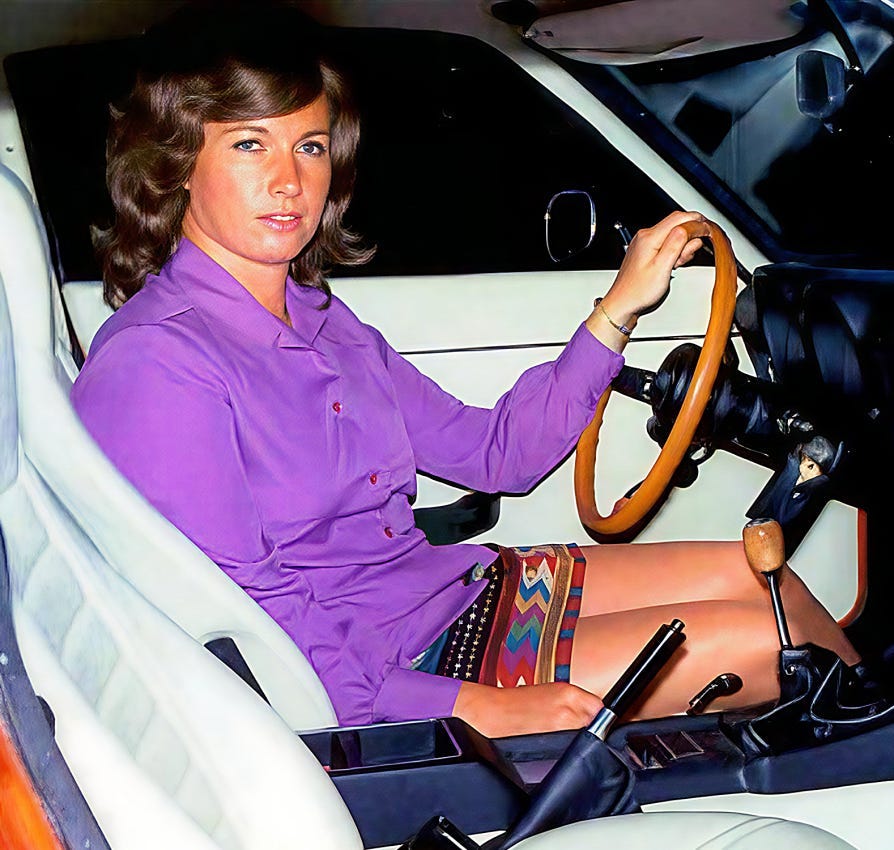
Work on the Project-Y's "Advanced Computing Systems" (ACS) continued until 1969, when it was deemed unprofitable and aborted. By that time, too, Conway had gone to her bosses and let them know about her gender dysphoria and her plans to have gender-affirming surgery in the near future.
Upon hearing this news, IBM fired her, a few months before she would have her surgery in Mexico.
If such a blatantly discriminatory firing occurred today, Conway would have an easy time proving wrongful termination and receiving a significant financial settlement with the company. But in 1968, when she was let go, such an option did not exist.
Consequently, for months afterward Conway and her family suffered near financial ruin. This, and the strain of Conway's coming out to her then-wife, resulted in divorce. Worse yet, she was told to stay away from her two young daughters, an estrangement that lasted 14 years.
Meanwhile, Conway applied and interviewed successfully at many other computer firms. Whenever they found out about her gender change, they declined to offer her a job.
Eventually, Conway would finally find employment at Xerox, where she became an integral part of that company's PARC (Palo Alto Research Center) division, whose groundbreaking computer chip technology known as Very Large Scale Integration (VLSI) led directly to development of the personal computer and cell phone, among so many other modern marvels we now take for granted.
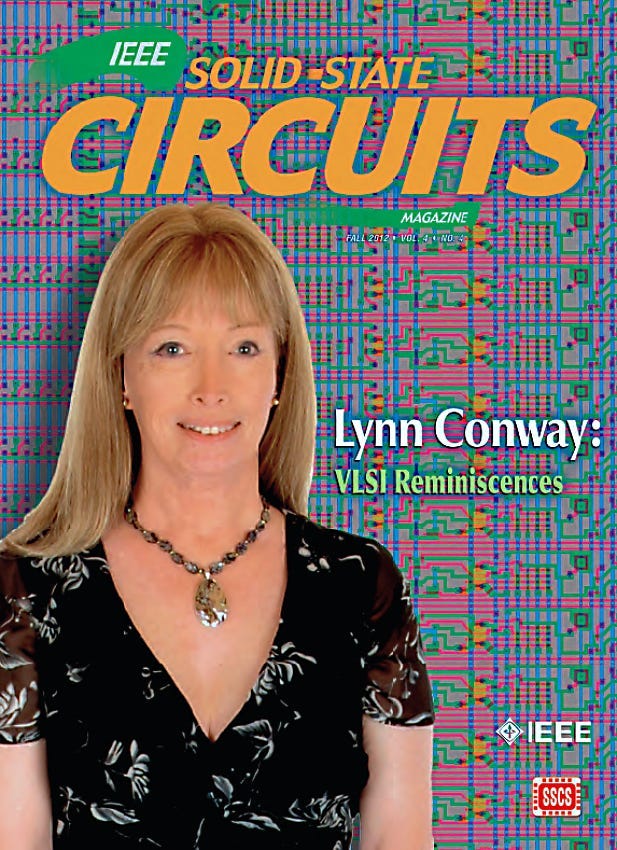
By the mid-1980s, Conway would be acknowledged as one of the world's leading computer scientists, recipient of numerous awards and accolades. Her notoriety caught the attention of James Duderstadt, associate dean of engineering at the University of Michigan, who offered her a professorial position in the school's Electrical Engineering and Computer Science Department.
For the next 14 years, Conway taught at the University of Michigan and lived a quiet, solitary life in Ann Arbor. Few people knew that she was transgender, or even her previous experience at IBM. That all changed in 1999, when she read an article by a computer science professor named Mark Smotherman, concerning the ill-fated Project-Y.
This article, titled "ACS — The First Superscalar Computer?" piqued Conway's interest. Alone among the few people working on that top-secret project, she had kept research material and notes related to it.
Conway decided to share some of the cache of Project-Y material in her possession with Smotherman. Doing so also created a problem. Virtually nobody knew about her employment at IBM, which took place in her previous gender and under a totally different name.
After thoughtful consideration, Conway quietly added a "Retrospective" page to her personal website that outed her. No big announcement, no press release, just a simple matter-of-fact recounting of her early life and career.
The revelation took many by surprise, as they had never known Conway as anything but a woman. The response of most was respectful and even encouraging. In 1987, Conway met a man named Charlie Rogers, whom she married in 2002.
With time, her accomplishments in computer engineering became more widely known and her status as a transgender pioneer was finally recognized. She would never become a billionaire, as had Bill Gates. But as noted before — life is not fair.
In 2023, Conway was elected to the National Inventors Hall of Fame. Then on June 9, 2024, Conway died at her home in Jackson, Michigan, at age 86.
Conway provided a hopeful, but ultimately unfulfilled, wish written in the third person as the final lines of her autobiographical essay, "Lynn's Story."
"The day will come when gender transition is no longer seen as a sad, somewhat shameful, and tragic event, but instead as a wonderful life-giving miracle for those so unfortunate as to have been misgendered at birth. Lynn hopes to live to see that day."
Since 1993, Pride Source Media has been independently owned, uplifting voices often overlooked by mainstream media. Help us keep independent journalism thriving by recommending our Substack to a friend.
 | A guest post by
|